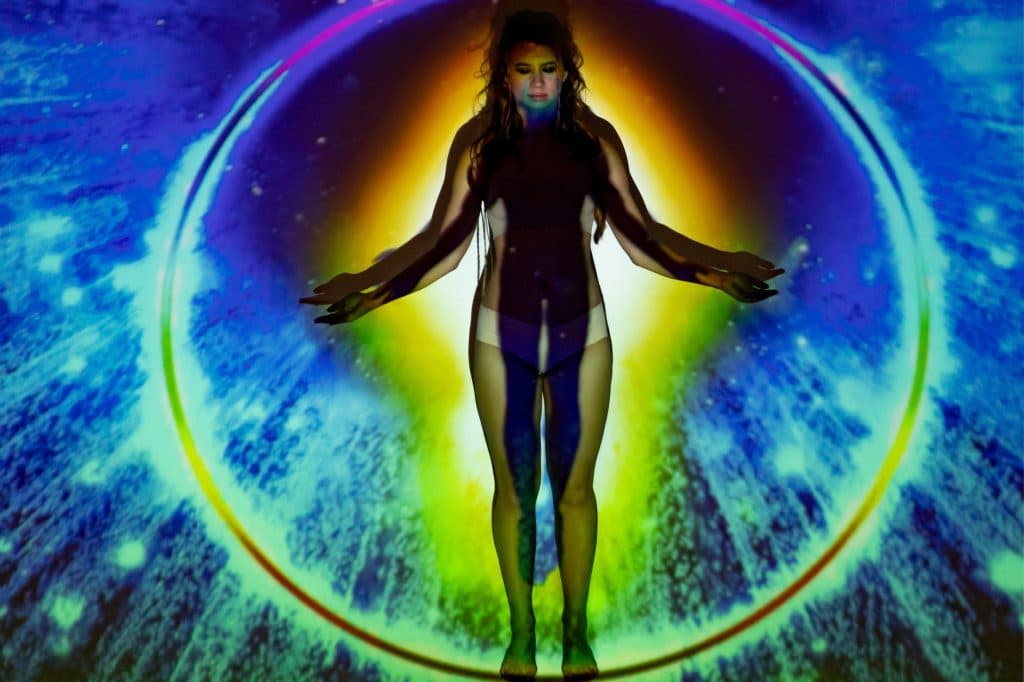
Watching futuristic sci-fi films often proves quite problematic for many of us. A large proportion of the population always seems to be missing. Where are all the ugly, overweight, bespectacled, disabled people?
They no longer seem to exist. We can only presume they were transferred into some “Wellsian” underworld.
But maybe not; maybe there is a reasonable explanation for this exorcism of large swaths of our existing population.
Fearful of stereotypical and prejudicial accusations and seeking to lend credence to the vision they have portrayed, producers of these programmes may argue that, in the future, the world will be inhabited only by attractive, perfectly formed beings.
And why shouldn’t it be – especially if that sci-fi world alludes to some model state? It does seem to make sense; in a utopian existence, a perfect world would be inhabited by perfect people. That’s the basis of evolution: a species adapts to its environment. The more we can create a better environment, the more humanity will adapt to that environment, the more we will better ourselves until ultimately we too reach that perfect state of being.
Logic suggests that by creating the perfect environment, we will inevitably create the perfect human specimen.
Not only that, but there may be a second evolutionary reasoning to their vision. It is also true that evolution is naturally progressive – good genes get better as they reproduce with other good genes. Whatever the quality – attractiveness, sportiness, intelligence, healthiness – they are all self-perpetuating. They seem to seek out and pair with like genes. That’s why attractive people tend to have attractive partners, and why intelligent people like to mix with other intelligent people.
In this attributive match-making, genetic qualities are strengthened and reinforced. There is genetic intensification. These desirable genes become more prevalent.
Conversely, those less desirable traits prove unattractive to reproductive partners and, as they are spurned, they are gradually whittled down until they eventually disappear.
For sci-fi devotees, this all supports their case. From an evolutionary point of view, humanity’s good genes become more widespread; our bad genes become rarer. Evolution fosters an improved population. It means that we are on course for the perfection of humanity.
The depiction of humanity as portrayed in many sci-fi films can therefore be considered a fair representation of our future world.
Unfortunately, though, as much as we would like to believe that we are on this progressive route, there is a flaw in the analysis.
Although sci-fi producers may understand the wider evolutionary process, they make one significant omission. They do not fully appreciate the unique approach humanity has taken on our evolutionary journey.
All living forms evolve to secure their survival in a given environment. In so doing, this evolutionary adaptation means that, as species change, the environment will also constantly change. Hence, there is a further need for species adaptation. It thereby becomes a self-perpetuating cycle.
It is also a battle for the survival of the fittest; it is those species and those individuals within a species that are best suited to their environmental conditions that will survive. Each is looking to gain an edge, as they are all aware that they have a genetic vulnerability they must protect themselves against. It is this ever-looming adapt-or-perish precariousness that encourages the progressive improvement of a species. This is why beneficial genes get passed on to future generations.
As a result, as declared by our sci-fi producers, the best genes get stronger, and weakness is eradicated.
This evolutionary process, however, does not exactly apply to humanity. Humanity has chosen a different evolutionary course. Having recognised that our survival prospects would have been limited in a natural world, rather than live according to Nature’s dictates, we have sought to challenge Nature. We have opted to step out of the shadow and control of Nature and to try to take control of our own destiny.
To secure humanity’s survival, we have chosen a course of development beyond the normal genetic remit. We created society in order to protect ourselves. This would be our defensive mechanism, enabling us to withstand and fight against the ravages and harshness of Nature.
Society – living together – meant that we acquired communal strength and resilience. By providing food, shelter and support for one another, we were no longer wholly bound by our natural environment; we no longer had to fully comply with our genetic masters; we no longer had to succumb to the whim of Nature.
Society was our saviour, the means by which humanity gained its freedom from Nature.
But, in doing this, there were consequences:
Firstly, with society to shield us from the demands of Nature, we were no longer obliged to act according to our Genetic Priority – to do what was in the best interests of our genes. We could now act according to our individual interests, doing what we wanted. This meant that we no longer had to reproduce in accordance with the best interests of our genes. Genetic enhancement was no longer our central purpose.
As a result, genetic pairing wasn’t always optimised, and substandard genes could still find reproductive success.
Secondly, the basis for society’s existence was that it would protect the individual. As a result, individuals with genetic frailties, shortcomings, or defects could, with society’s support, survive and reproduce, even though they were not genetically advantageous.
In fact, they could be genetically unfavourable and damaging, yet still reproductively successful. Weak and inferior genes could survive and prosper in a safeguarding societal environment.
A third consideration is that society – our new Living Environment – grew to replace Nature as the controlling force in our lives. And, in regard to its population, society has very different requirements from those of Nature. As society’s influence, capability, and reach grew, it increasingly became the main regulator and director of what was genetically attractive and desirable. This meant we would now evolve to meet the very different needs of society rather than the demands of Nature. What might be considered as weaknesses in Nature might be thought of as strengths in a societal existence.
These three developments changed our outlook and approach to reproduction, effectively meaning that humanity was no longer on the road to the perfection of the human form – certainly not as Nature would have intended.
In fact, the more that our society advances, the more our Genetic Priority is diminished and genetic imperfection extended. Evidence for this is all around us if we compare our physical state with that of our ancestors or with people living in less developed societies.
That’s why sci-fi producers have perhaps tended to misread the course of evolutionary progress. The real future – given the current societal trend – is for a more diverse, dissimilar and imperfect population.
For other interesting blogs on this subject area, check out Articles or the Article Index
 Genetically Wrapped
Leave a comment