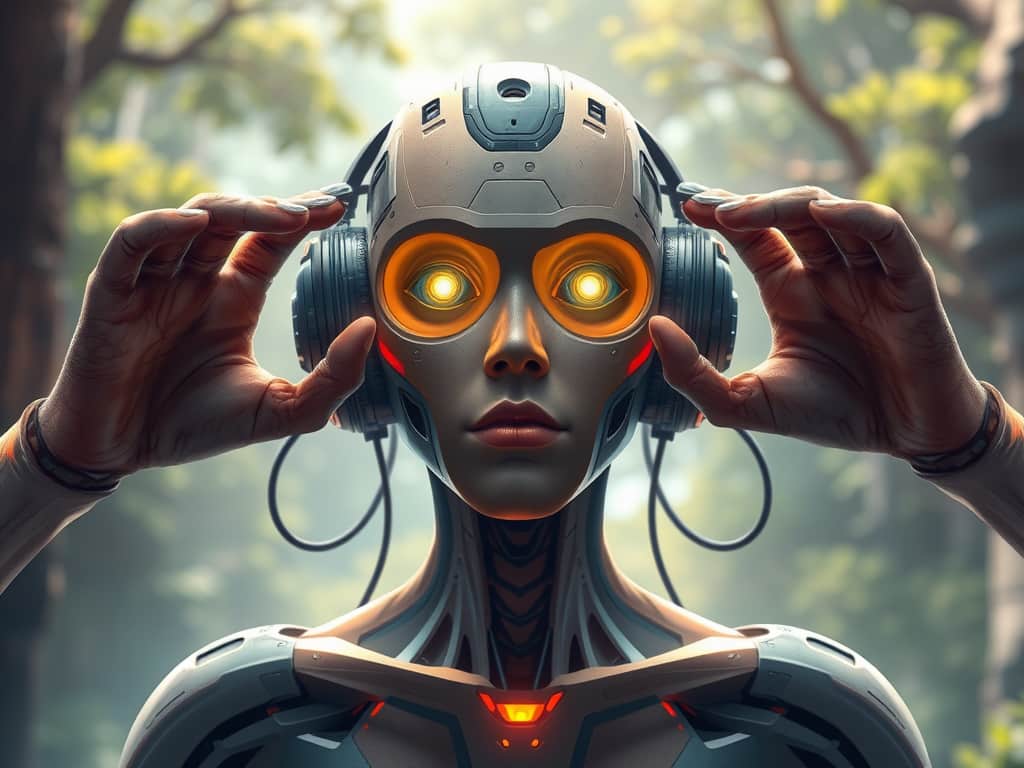
Humanity, like all species, adapts to its environment. If we have the genetic opportunity to make an advantageous adaptation, one that provides some benefit within the prevailing environment, then we will seize that chance. It should be good for us; it should improve our survival prospects.
Adopting an upright stance or the development of opposing thumbs are both examples of massive physical shifts that have occurred within our species. These changes conferred a significant advantage on humanity compared with other species.
Genetic change is designed to make us more attuned to our environment, ensuring we are better equipped to prosper in it.
These adaptations would not be one-off genetic shifts that could be pinpointed to a specific time. Evolution doesn’t work like that. Genetic adaptation is a process of change that occurs little and often. Change would have happened very gradually and would have gone largely unnoticed – until, that is, it was cemented in existence.
The other notable characteristic of evolution is that it is a continuous process. It is happening all the time. It is happening now.
Humanity is still evolving. We are and will always be a work in progress.
Inevitably, this makes us want to speculate. For humanity, what will be the next major genetically driven, noticeable physical adaptation? If humanity’s existence continues unabated, in, say, fifty thousand years’ time, what difference in the human form would we be able to observe?
One attractive possibility is the ability to better leverage our dual-capacity features. If we have two of something, we should be better able to improve their use and use each independently.
- We have two hands – one could be doing one thing, whilst the other does something completely different, like writing two separate things at the same time.
- We have two eyes – one eye could be used for looking around at our surroundings, whilst the other has some technological link to the internet.
- We have two ears – one could be listening to a conversation whilst the other listens to something else, like a podcast.
Perhaps we are already progressing down this route. Perhaps we are already in the early stages of this evolutionary transformation.
- There are ambidextrous individuals. They can use their hands equally well. They have not yet acquired the skill to use them independently.
- Some contact lens wearers use separate eyes – one for short-sightedness and one for long-sightedness. Their brains can make the necessary adjustment so that, when using both eyes together, they have full, normal vision.
- Some people wear a single earpiece to have a constant background soundtrack for their everyday activities. It means that they can hear what is going on around them whilst also listening to something else. They may not be able to concentrate on both at the same time, but they will, instead, dip into each audio feed as required.
This dual capacity is feasible. Our brains could conceivably make the necessary learning and adjustments. These are, after all, skills that have developed elsewhere in Nature. For instance, octopuses can operate their arms independently, and chameleons have eyes that move independently.
There is no reason why, subject to the necessary genetic mutation, humanity cannot acquire these skills.
It would certainly be beneficial. It would take multitasking to a new level. Dual activity would increase our productivity. It would also allow us to pursue a twin-track existence – interacting with technology whilst simultaneously living our lives.
At the moment, it can be difficult to do both. Mobile phones, for instance, can be invasive, distracting, and unsociable. And yet we have become attached to them as if they are a part of our being. If only we could manage these technological devices without it affecting our wider existence.
Given the amount of time people – especially young people – spend on their phones, there certainly seems to be a demand for this.
In fact, our technological advancement may just be the stimulus that such a dual-capacity evolutionary adaptation needs. It’s market-led genetics. Mutations are most likely to be identified, appreciated and seized upon when there is a demand for them.
With this dual capacity, we would be able to better use our bodies, making them more efficient and more integrated with advances in modern technology.
Of course, whether or not this happens, whether or not this genetic adaptation is adopted, will depend on how useful we believe it will be and whether or not we think that there might be something else that is more advantageous and for which we would prefer to concentrate our evolutionary development.
The fuller use of our dual capacity features isn’t the only evolutionary path open to us. There will be many other options. In fact, a genetic battle constantly rages within us as mutations struggle, first to make an impression, then to gather strength and momentum, and finally to achieve dominance.
We cannot advance in all directions. We have to select the developmental course which will prove most advantageous. Evolutionary development is about making these choices and prioritising what we believe will make a positive difference.
The independent use of our dual features would certainly be a valuable skill. It may well be a candidate in the battle for genetic contention.
For other interesting blogs on this subject area, check out Articles or the Article Index
 Genetically Wrapped
Leave a comment