Society – even though it can come in many guises – is a great man-made edifice that has enabled humanity to survive in a natural world that can be harsh and merciless. We get our strength from society.
Quite frankly, without society’s protection, we would not have survived. It is our defensive barrier, our protective armour against the wider world.
In deciding on our evolutionary journey, we could have chosen differently. Others did. A solitary existence; an existence based on a particular physical attribute; an existence that flourishes in one particular type of environment. There were countless options and opportunities. It seems, though – based on our ongoing survival – that, by opting for a societal existence, we made the right call at the right time.
Society saves lives; Society saves humanity.
It’s not an exaggeration. If exposed to Nature’s forces, we would soon succumb, for without society’s protection, we are weak and vulnerable. Nature would overwhelm us. Just as an unused, unmaintained road quickly gets overgrown with vegetation, we too would soon be lost.
Nature abhors weakness. The weak are preyed upon. The weak don’t survive.
Mostly, under society’s auspices, we have been safe and free from the everyday forces of Nature. Society is built and managed to provide for us, protect us, and ensure our continuance.
Occasionally, though, Nature does reveal its strength and our potential weakness – natural cataclysmic events such as volcanic eruptions, earthquakes, tsunamis, hurricanes….. They can have a devastating effect on populations.
Other species have been decimated, and even driven to extinction, by their inability to defend against external threats. Tasmanian tigers were eliminated through disease, and Pinta Island tortoises were wiped out by the introduction of goats to their island.
The good news is that the size and distribution of the human population make extinction unlikely. But that does not mean we should be complacent. If an effective response to a threat isn’t made, then there is no reason why whole swathes of our population cannot be eliminated.
The fact that there have been so few global threats to our existence demonstrates how effective society has been in pre-empting and preventing dangers. However, there are certainly forces out there that will have it in for us.
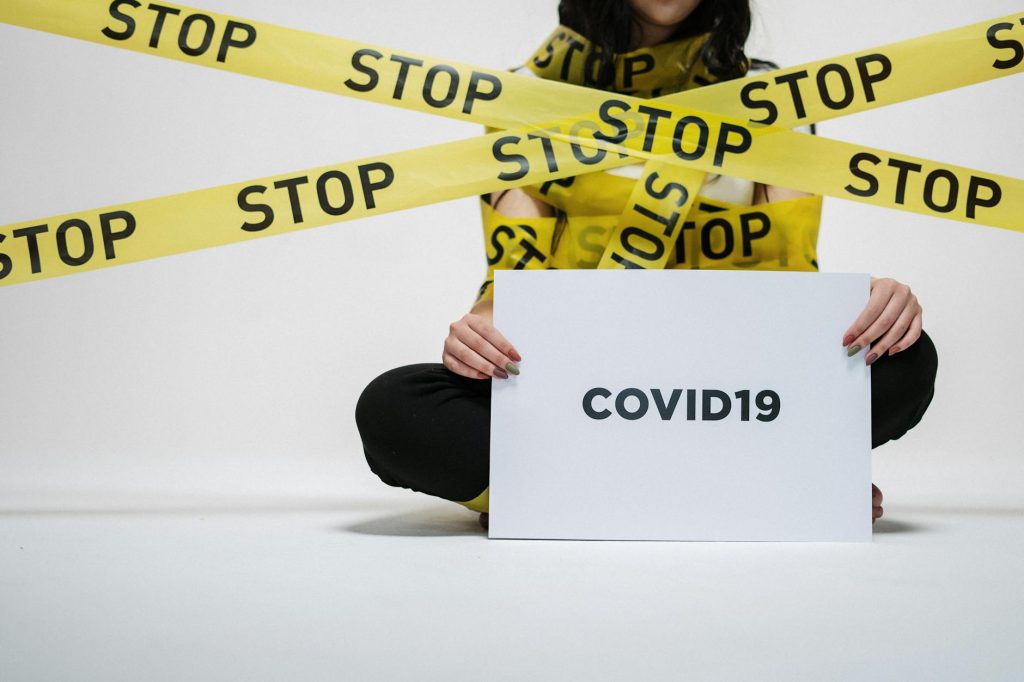
Covid-19 turned out to be one of those forces.
The fight against the virus was often described as a war. It was a very different kind of war, a war that we didn’t fight with military might but one that we attacked through our science and defended through our healthcare. The enemy was not our usual kind of adversary (our fellow beings) but was a rival from Nature. Normally, such forces would not reveal themselves in such a manner. They would tend to be far more localised and of far lesser force. In contrast, Covid-19 was a real humdinger!
Our battle with Covid-19 demonstrated the power of society to protect us from a threat to our existence. All over the world, social distancing and lockdowns occurred, with new ways of living imposed upon us. We made sacrifices and pursued behaviours that few would have previously thought acceptable or practicable.
In the sharing of knowledge and the development of medications, society acted in a unified manner, and individuals, in relation to one another, became more supportive, more generous, and more considerate. Society revealed its deep, wide-reaching strength.
So, although Covid-19 wreaked damage, it neither destroyed us nor harmed our long-term futures. The fact that we came through it shows society’s resilience and effectiveness. In many ways, it proves that choosing society as our developmental pathway was wise.
Covid-19 could easily have been our dinosaur moment. Society ensured that humanity was up to the threat.
There are, however, lessons and warnings for the future that we should be mindful of:
- If it’s happened once, what’s to stop it from happening again? What’s to stop it from being even more of a threat next time?
- Was Covid-19 possibly of our own making? In our drive for scientific advancement, could we have been complicit in creating the virus? Whether out of ignorance, recklessness, or blunder, we may be undertaking activities that carry dangers with them.
- Could Covid-19 have been a manifestation of one of our vulnerabilities, a complication arising from our choice of a societal evolutionary course? There is always a worry or danger that society may have a tipping point; that it will operate for so long as an effective guardian for humanity, but, as it continues to expand, it will begin to outgrow itself and to generate its own irreconcilabilities and issues as it becomes increasingly at odds with Nature’s environment. Covid-19 may have been an example of humanity pushing the societal boundary too far.
If humanity persists in doing its own thing without heeding these warnings, we may one day find ourselves totally out of kilter with Nature’s environment. It might leave us exposed to some unexpected, unexperienced, unequalled force from Nature.
So, although we may have confidence in our human abilities, we should not get too carried away.
Our history shows that we can all too easily get it wrong. There are practices that we have pursued in the past which we now know to be unfounded, misguided or harmful – blood-letting, the burning of witches, our disregard for personal hygiene, the consumption of mercury for health reasons.
There will be practices we currently pursue that we will look back on as ill-advised, inept, naïve, or just stupid – our acceptance of pollution, or our overexposure and use of chemicals, might be considered good examples.
The concern is that, in a world that is much more contracted and interwoven, our wrongful thinking may have a greater impact. Smaller mistakes can have greater consequences.
There are so many potentially harmful or destructive forces that could be consequential:
- Too often, we will assume that the powers that be – the decision-makers of the world, the experts in their field – know what they are doing.
“Yes, it’s scientifically proven to be safe.”
“By doing this, we will secure the nation’s future.”
It is not always the case. One should always have a degree of scepticism. The evidence suggests that they are often mistaken.
The drug Thalidomide was used to treat insomnia, morning sickness and depression. Thoroughly tested and yet, by taking it, many pregnant mothers went on to have deformed babies.
- Sometimes we only see the good that something does. We’ll turn a blind eye to its negatives. Lead was added to petrol to prevent engines from knocking, even though we were aware of the dangers it could pose.
- Sometimes we can be too easily sold on an idea. The power of persuasion. There have always existed elixirs of youth and cure-all potions. Why do we believe such nonsense? Even today, we have anti-ageing creams and Botox treatments, which make appealing assertions but perhaps don’t give us all the facts. If it’s too good to be true, then it probably is.
- Sometimes what we do can seem like a bright idea, but only later do we realise it comes with unforeseen consequences. The construction of high-rise flats in the 1960s solved the housing shortage but led to a rise in social issues.
- Sometimes, commercial gain can drive ideas. Deforestation is carried out to provide additional profitable arable land, but in doing so, we do not account for the global environmental costs.
- Our behaviour can be driven by other forces that can be compelling because they are supported by a particular belief system. Religious or cultural traditions can shape behaviour. Suicide bombers are a case in point.
In some societies, the consumption of Rhino horn or shark fins takes place for their medicinal properties. And so we hunt these animals to extinction. This is nothing new. The American Bison was nearly hunted to extinction in the nineteenth century.
We should therefore not be complacent about what we do and never assume we know best. Respecting Aristotle’s saying that “the more you know, the more you know you don’t know”, we should recognise that enlightenment is a journey – it should be treated as a verb rather than as an adjective, a doing word rather than a state of being.
Societies may have advanced, and we may have a greater understanding of the world, but it doesn’t give us immunity from mistakes, misguidance or misbelief.
Next time, Nature may prove too strong for us. At that point, we’ll have had our time – our journey will be done.
For other interesting blogs on this subject area, check out Articles or the Article Index
Leave a Reply