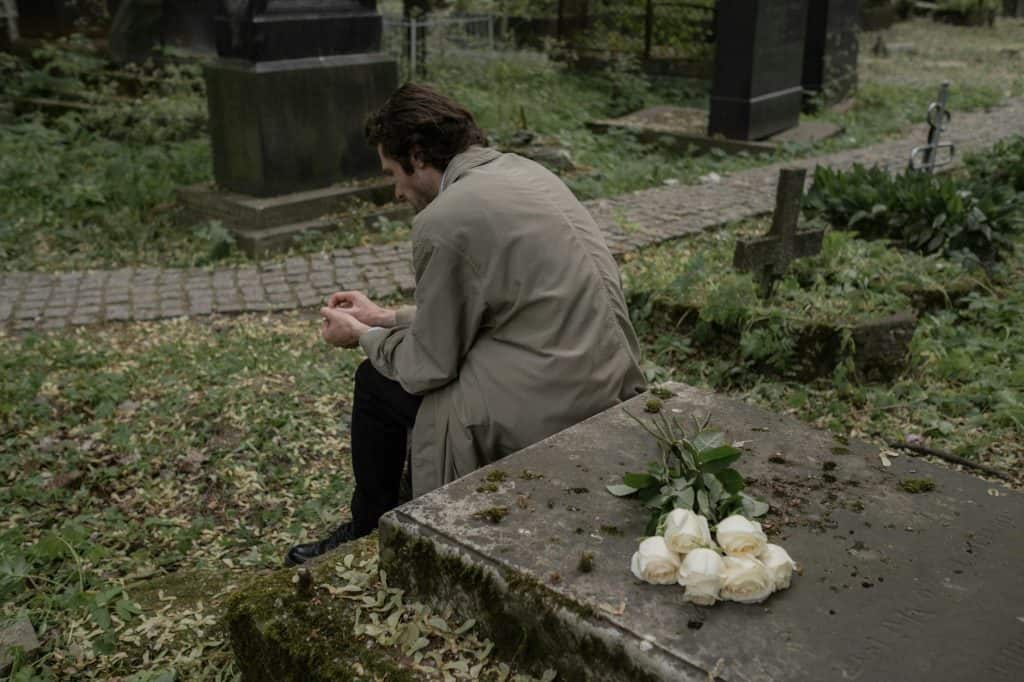
Is it possible to be alive but dead or to be dead but still living?
It depends on how we define death.
Death is about being in a non-contributory state. It is when we cease to be doing anything. More specifically, it is when we no longer have any purpose, relevance, or value for our genes.
There are actually more ways of determining death than we might assume.
Physical Death – This is our normal understanding of death. It is the point when we cease to breathe, when we physically expire, when our body is no longer able to sustain our existence. It is the death we mourn.
Reproductive Death – This is when we are no longer able to genetically reproduce, when our procreational capability has ended.
Reproductive death tends to come earlier in women than in men.
For women, in the interests of both mother and child, Nature has set a limited time frame for reproduction.
Although most men have a much longer Reproductive life span, the majority of men opt to end their reproductive lives far earlier than they need to, far earlier than they necessarily should. They tend to believe that by limiting their reproductive investment – concentrating resources and reducing genetic competition – they are better able to maximise their returns.
Sometimes an individual’s genes may not get passed on – there may be reproductive issues, individuals may deliberately choose not to procreate, or individuals may die before they are able to procreate. These cause our premature Reproductive death.
Heritable Death – This is when we cease to pass on anything to our genetic descendants, when our genetic usefulness is over.
The environment in which our genes exist plays a major role in shaping their future prospects. That environment is largely determined by others. As individuals, our responsibility is not only to reproduce, but also to properly raise our offspring. We have to give them what they need so that they can go on to lead genetically fruitful lives.
Everything we do in shaping the environment of our offspring is considered as a Heritable contribution.
Generally, the more that parents invest in their offspring, the more successful those offspring will go on to be. Most parents recognise this, which is why they will always be there for their children and prioritise them.
These three types of death – Physical, Reproductive, and Heritable – are not the same. Their boundaries cross. This means we can be alive in one context but dead in another.
Physically, we may still be alive, but we may no longer be able to procreate, meaning that we are Reproductively deceased.
Then again, by banking our genetic product, we could be physically dead but reproductively alive.
Physically, we may be dead, but that does not necessarily mean that we are also Heritably dead. We may continue to have life for our genetic lineage. Our genes may live off our wealth, our celebrity acclaim, our educational provision, our enduring memory, or our imparted wisdom.
Or, we may not be able to reproduce any more, but that does not mean we have nothing further to offer. Through our Heritable life, we can still be genetically influential. We can still have a positive impact on the environment in which our genetic descendants exist.
Of these three deaths, we can only influence our Physical and Reproductive lifespan at the margins. For instance, physically we can try to maintain a healthy lifestyle, keeping fit and eating nutritiously. In so doing, we may be able to live longer, extending our physical existence.
Or, reproductively, we may be able to extend our lives through the use of fertility treatments.
But it is our Heritable life that we can have the most influence over.
In assessing our Heritable contribution we need to consider: How committed we are to our offspring? Where do they stand in terms of our priorities in life? To what extent do we let the attractions and diversions of society lure us away from doing what we should be doing for our offspring?
It is our Heritable life that we should be primarily investing in. This is the life we should seek to maximise.
By living a full and active Heritable life, by prioritising our Heritable life, by extending our Heritable life for as long as possible, we can make the greatest contribution to our genetic well-being and future.
This is, after all, what life is about. This is the purpose of our existence. We live for the benefit of future generations.
In practical terms, focusing on our Heritable life means:
- Creating an environment that enables our offspring to achieve their full potential.
- Ensuring our offspring receive the care and support they need.
- Always acting in the best interests of our offspring.
- Continuing to support our own children as they move beyond childhood to being adults.
- Helping to raise our grandchildren and great-grandchildren.
- Passing on – if we are able to – a meaningful inheritance – wealth, acclaim, memories.
- Ensuring family heirlooms are passed on to future generations with an understanding of their history and importance.
- Ensuring that there are grandparents, godparents, or guardians to succeed us should we suffer an untimely Physical death. These would be people who know our minds, people we can trust to ensure our children live a life as we would want for them.
By following these actions, our descendants can benefit from our existence. We maximise our Heritable life.
The problem is that, in society, in an environment largely free of Nature’s demands and rules, we make our own decisions about how we live our lives. We do not necessarily do what Nature prescribes. Instead, we may choose to prioritise different aspects of life. Notably, our own Personal Fulfilment.
Some people – risk takers or those who abuse their bodies – will bring forward their Physical death. They will die young. In so doing, they are being neglectful of their Heritable life.
Other people may believe that maximising their Reproductive life by having more offspring is the best route to their ongoing genetic survival. But they, too, may be weakening their Heritable contribution by diluting what they are able to offer.
Then there are those individuals who choose not to reproduce. This does not mean that they cannot make a Heritable contribution. Aunts or uncles can be a valuable resource. It would just not be to the benefit of their own immediate genes.
Given this understanding, we are perhaps rather misguided in the significance we place on our Physical death. Life is much more than having a physical presence. Life is about having a Heritable existence. That is what we should be prioritising.
Those who are genetically successful are those who live a fuller Heritable life, prioritising their Heritable life, committing more to their Heritable life.
Defining life and death may not be as simple or as clear-cut as we have tended to believe.
It seems that we can be alive but dead; we can also be dead but still alive.
For other interesting blogs on this subject area, check out Articles or the Article Index
Leave a Reply